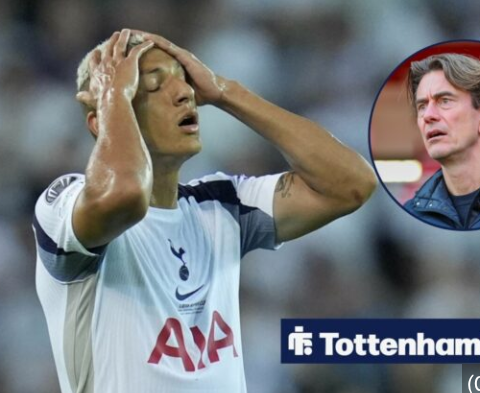
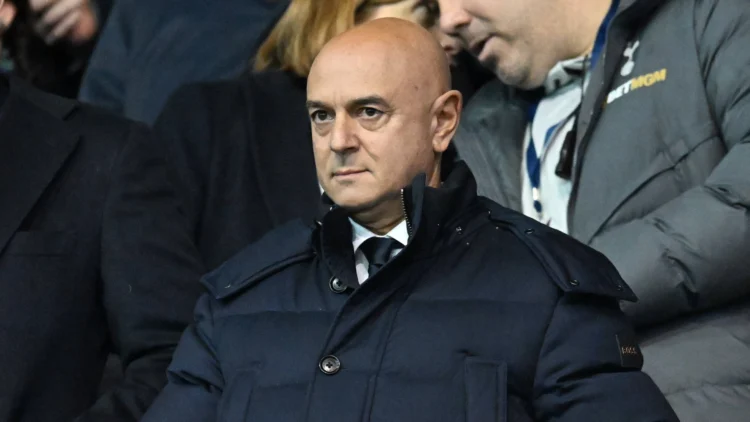
Tottenham’s struggles on the pitch are reportedly affecting Daniel Levy’s ability to sell his ENIC shares at his desired valuation, according to sources who spoke to Football Insider.
Although Levy stepped down as executive chairman in September, he still retains an indirect interest in Spurs through his 29.88 per cent stake in ENIC, the British investment firm that owns 86.91 per cent of the club.
Bloomberg reported on 30 January that Levy has been in discussions to sell his ENIC shares as part of a consortium involving Hong Kong businessman Ng Wing Fai, with talks centred around a potential £1 billion deal.
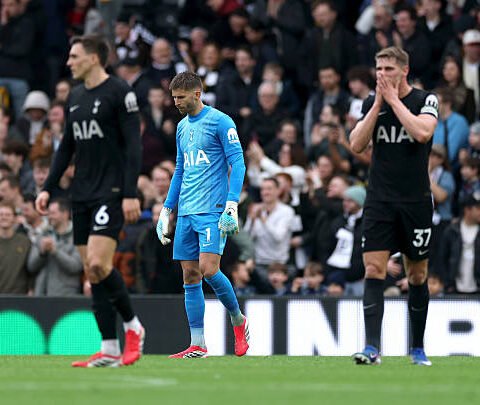
However, Spurs’ disappointing season could complicate those plans. Thomas Frank’s side currently sit 15th in the Premier League, only six points clear of the relegation zone. Sources suggest that poor performances — particularly if Tottenham fail to secure European football — could make it difficult for Levy to achieve his £1bn asking price.
Despite progressing to the Champions League last 16, winning the competition may be their only realistic route back into Europe unless their domestic form improves dramatically. With injuries mounting and the club languishing in the bottom half of the table, potential buyers may be hesitant to invest in a minority stake under current circumstances.
It has also emerged that Levy is free to sell his shares to any buyer. The Telegraph reported on 5 February that the Lewis family, who control the remaining 70.12 per cent of ENIC, do not hold matching rights or first refusal over his stake.
However, Levy’s shares come without voting rights, a board seat, or direct influence at Tottenham Hotspur Stadium. Football Insider reported that, due to this lack of control, the true value of his stake may be closer to £800 million — and that figure could fall further if results do not improve.
Finance expert Stefan Borson described the situation as “very surprising” if there is no shareholder agreement in place governing a potential sale. He explained that such agreements typically include provisions like matching rights, first refusal, drag-along or tag-along clauses to regulate what happens when a shareholder wants to sell.
“It would be unusual,” Borson said, “for there either to be no shareholder agreement or for it not to address one of the most important issues — what happens if a shareholder wants to exit.”
There are also questions over whether the consortium linked with Levy would be the right fit alongside the Lewis family. It is understood that the Lewis family could consider buying Levy’s shares themselves if a suitable external partner does not emerge, particularly after taking a more hands-on role in the club’s operations in recent months.