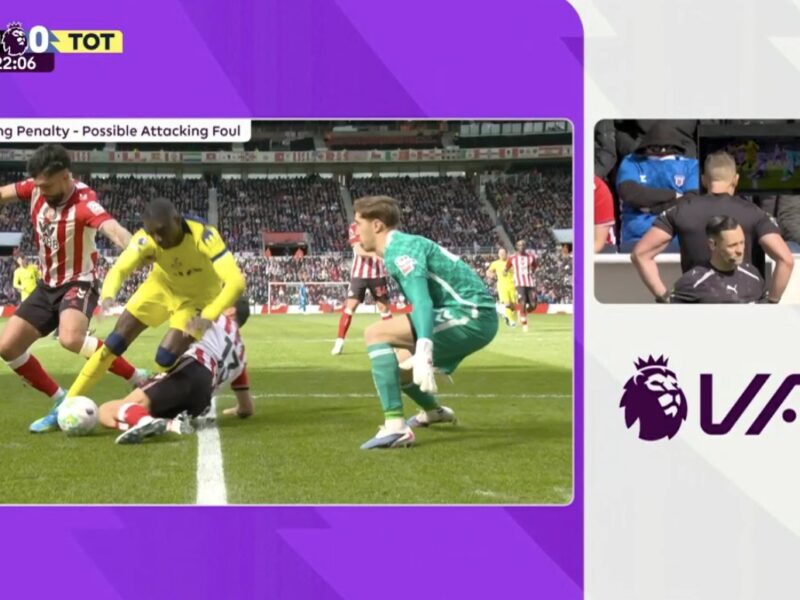
Controversy has once again surrounded the Tottenham Hotspur fanbase after their 1–0 loss to Sunderland AFC, following the overturning of a first-half penalty awarded to Randal Kolo Muani after a VAR review.
What looked like a clear foul inside the box quickly became another major talking point in a season already filled with officiating frustration for Spurs. The Football Association (FA) later issued an explanation for the decision, but instead of settling concerns, it has fuelled even more debate over consistency and fairness.
For a side already battling relegation and going through one of their worst Premier League runs in decades, the moment has come to represent wider issues within their season.
The key incident
The decisive moment arrived in the 21st minute at the Stadium of Light, when Tottenham were initially awarded a penalty after Randal Kolo Muani went down under a challenge in the area. The referee immediately pointed to the spot, sparking relief among Spurs players and supporters.
That relief didn’t last long.
After a VAR review, the decision was overturned, with officials concluding that the Sunderland defender had made contact with the ball. The challenge, initially seen as a trip, was reclassified as a fair tackle, with the defender judged to have won the ball before any meaningful contact with Kolo Muani.
Still, the ruling was heavily disputed.
Many fans and analysts highlighted visible contact on the attacker, reigniting the long-running debate over what actually constitutes a foul in modern football.
FA explanation for the reversal
According to post-match clarification from the Football Association, the decision was based on two main factors:
1. Clean contact with the ball
Officials determined the defender successfully played the ball first. Under current laws, winning the ball can mean subsequent contact is not automatically considered a foul.
2. “Clear and obvious error” standard
VAR is only meant to intervene when a clear mistake has been made. In this case, officials felt the on-field decision did not meet that threshold for a penalty to stand.
However, this reasoning has only deepened frustration among Tottenham supporters.
Why Tottenham fans are angry
Supporters argue that the decision highlights ongoing inconsistency in officiating.
Many believe:
The contact on Kolo Muani was enough to disrupt his movement
The follow-through played a role in the fall
Similar incidents in other matches have still resulted in penalties
From their perspective, it adds to a growing list of questionable decisions in a difficult season.
A difficult season for Spurs
The incident is being viewed in the context of a much larger struggle for Tottenham Hotspur, who are enduring a 14-match winless run and sit in the relegation zone.
With pressure mounting, every controversial decision feels even more significant, especially in a campaign already defined by poor form and frustration.
Why the moment mattered tactically
At the time, the penalty had the potential to shift the match completely.
Under new manager Roberto De Zerbi, Spurs are trying to build a more structured, possession-based approach.
The penalty would have:
Given Tottenham an early lead
Boosted confidence in a struggling attack
Forced Sunderland to change their defensive approach
Instead, the reversal shifted momentum away from Spurs, disrupted their rhythm, and allowed Sunderland to grow into the game before eventually scoring the only goal via a deflection.
VAR and the wider debate
The incident has reignited criticism of VAR in English football, with concerns focusing on:
Inconsistent decisions across matches
Heavy reliance on interpretation rather than clear rules
Confusion over what counts as a foul or “winning the ball”
For many fans, the issue is no longer technology itself, but how it is applied.
Fan reaction in the UK and Nigeria
In the UK, pundits remain split—some believe the decision was correct under the laws, while others argue it lacked consistency with similar incidents.
Among Nigerian supporters of Tottenham, frustration has also been strong, with many questioning why such decisions appear to go against the club more often than others.
Season implications
The consequences of the defeat extend beyond a single match.
Tottenham now face:
A continued fight against relegation
Increasing pressure on players and coaching staff
Growing tension around refereeing decisions
For De Zerbi, it adds further difficulty as he tries to stabilise a struggling squad under intense scrutiny.
Conclusion
While the FA’s explanation provides technical reasoning, it has done little to ease frustration among Spurs supporters.
The core issue remains consistency—because even if this decision was correct by the rules, fans continue to point out similar moments that have been judged differently elsewhere.
Ultimately, the controversy reflects a broader truth about VAR: it may have reduced some errors, but it has not eliminated debate. For Tottenham Hotspur, the impact of such moments could prove crucial in shaping their entire season.