
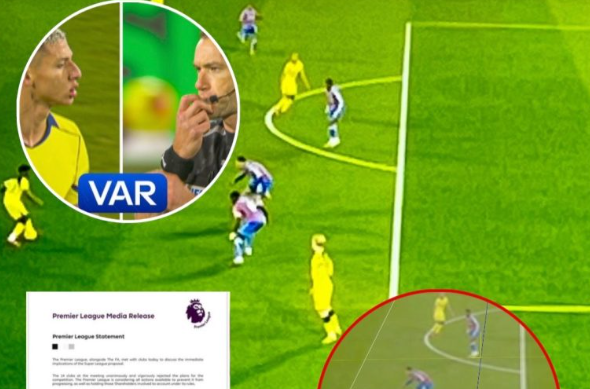
The Scottish Professional Football League (SPFL) is facing heavy criticism after offering a controversial justification for disallowing a goal that many believed was perfectly legitimate.
Replays appeared to show the scorer level with, or even marginally behind, the final defender at the moment the ball was played, yet the strike was ruled out for offside.
The decision, made during a high-profile league match, sparked immediate outrage among fans, players, and pundits alike. Television footage and images circulating online seemed to contradict the call, but VAR stepped in and the goal was ultimately overturned.
As the backlash intensified, the SPFL issued an official explanation that failed to ease the anger. According to the league, the ruling was not based on the final action leading to the goal, but on an earlier phase of play in which another player was deemed to have gained an “unfair positional advantage” under current offside interpretations.
The statement insisted the decision aligned with existing laws and officiating guidelines, and that VAR was used correctly within its limitations. However, many felt the reasoning was vague and did not reflect what viewers clearly saw during the broadcast.
Refereeing experts and football analysts soon raised concerns about the consistency of offside decisions and the uneven application of VAR across matches. Supporters, meanwhile, accused the league of hiding behind technicalities rather than admitting what they see as a clear officiating error.
Social media quickly filled with calls for greater transparency, including demands for the release of full VAR audio and more detailed explanations of decision-making processes. There are also reports that several clubs are privately uneasy about how similar calls could affect results as the season unfolds.
The episode has reignited the wider debate around VAR in Scottish football, placing fresh pressure on the SPFL to review its protocols and improve communication with fans. For now, the disallowed goal continues to dominate discussion, leaving many questioning whether a system meant to promote fairness is instead fueling confusion and frustration.