For almost an hour, the match had everything you’d want from a classic. Tottenham were in an intense, high-energy battle, the crowd was fully engaged, and every tackle felt like it had major consequences. It was tight, unpredictable, and balanced—one moment could tip the game in either direction.
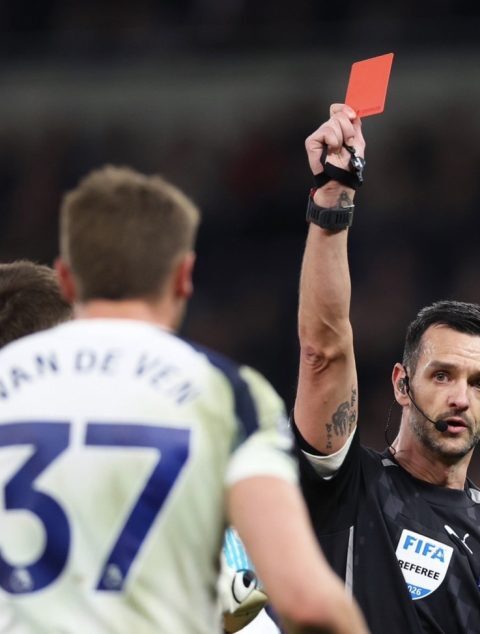
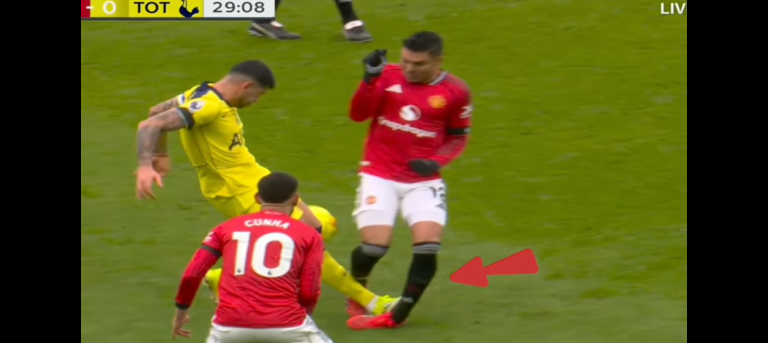
Cristian Romero, the captain, charged toward the ball with his signature aggression. In real-time, it looked like a player showing full commitment, urgency—just a defender determined not to give an inch. But as soon as the whistle blew, the reactions from the players and the rising anxiety from the stands were immediate.
The fans froze, then erupted. Shouts turned to angry chants, people held their heads in disbelief, and thousands demanded an explanation. All around the stadium, the same question was repeated over and over.
What made the reaction even more intense was the context. This wasn’t a one-sided game. Spurs were right in the thick of it, as were their opponents. It was a fast, physical, but fair contest—a true 50-50 battle. Then, in an instant, the tactical fight shifted into a struggle for survival. The crowd’s energy, which had been positive, suddenly became filled with anxiety. Instead of cheering Tottenham on, the fans were left to deal with shock and anger.
To many Spurs fans, it looked like Romero was simply making a genuine attempt to clear the ball. He was already in full motion when Casemiro managed to get a slight touch just in time.
Supporters argued that there wasn’t any time to stop or adjust. At that speed, it’s all instinct. Once a player starts a tackle, physics takes over. Sure, it was aggressive. Sure, there was contact. But deliberate? For many in the stadium, absolutely not.
The fans insisted it was a mistimed challenge, not malicious—reckless, perhaps, but certainly not deserving of a red card that would change the course of such an important match.
If they thought VAR would come to the rescue, they were wrong.
The VAR review dragged on endlessly. With each passing second, anticipation grew. Fans nudged each other, certain that the screen would overturn what they saw as an unjust decision.
Boos rained down from every section of the stadium. Angry chants filled the air, some aimed directly at the officials. Stewards appeared uneasy, while players tried to calm the crowd. But the sense of injustice had already taken hold.
From that point on, every decision, even the smallest ones, was met with outrage.
Down to ten men, Tottenham started to lose their shape. The opposition moved the ball with more confidence, and what had been a level contest began to slip away from Spurs.
Every attack from the other side felt like a consequence of the earlier incident. Fans tried to rally behind the team, but the emotional impact of the moment lingered. Many simply couldn’t move past it.
When the goals came, frustration mixed with renewed anger over the red card. In the stands, people pointed to that moment as the real turning point of the game.
Some will argue that Romero should’ve known better. As a leader, they say, he should’ve managed the risk, especially knowing how costly suspensions can be. Missing multiple matches will hurt the team.
But even those who agree with that argument still feel the outcome was too harsh.
After the final whistle, supporters lingered in the stands, continuing to vent. Conversations replayed the tackle over and over. Phones were out, clips were shared, and the consensus in those circles remained unchanged.
It wasn’t just about losing the game. For many, it was the sense that the match had slipped away due to one call, one moment that didn’t deserve the ultimate punishment. For those fans, that red card and the disbelief that followed will forever be tied to the memory of the defeat.