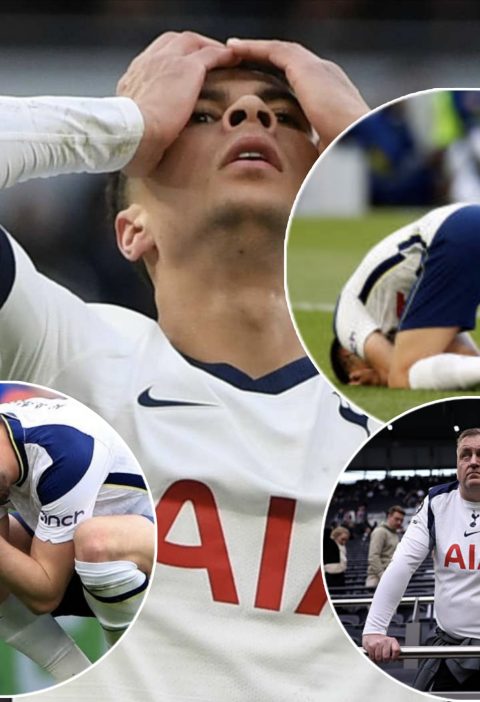
“Watching what my daughter is going through is one of the most painful sacrifices in tennis history…” In an emotional and tearful statement, Sergey Sabalenka, father of Aryna Sabalenka, broke his silence following his daughter’s defeat at the 2026 Canadian Open, leaving the tennis world stunned and deeply touched.

Aryna Sabalenka’s defeat at the 2026 Canadian Open is presented here as the backdrop for a deeply emotional fictional story about family, sacrifice, resilience and the unseen struggles behind the career of one of tennis’s most recognizable stars.
In this imagined account, her father, Sergey Sabalenka, reflects on the difficult journey his daughter has endured while pursuing success at the highest level of professional tennis.
The fictional narrative portrays Sergey speaking emotionally after the match, describing his daughter’s journey as one marked by sacrifice, pressure and perseverance. His imagined words are not an official statement or verified quotation, but rather part of a dramatic story designed to explore the human side of elite sport.
For years, Sabalenka’s career has been defined by powerful performances, major victories and her ability to compete under immense pressure. However, professional tennis involves much more than what fans see during a match. Behind every tournament are months of preparation, constant travel, physical demands, expectations and the emotional responsibility of performing before millions of people.
In the fictional story, Sergey looks beyond individual victories and describes his daughter’s career as a long journey. He remembers watching her develop from a young and ambitious player into an established international star while gradually learning how to deal with the expectations that came with her success.
The story also explores how difficult defeat can be for an athlete whose identity is strongly connected to competition. Losing an important match does not erase previous accomplishments, but the disappointment can still be difficult to process. Within this fictional narrative, the Canadian Open defeat becomes one moment in a much larger story rather than a reflection of Sabalenka’s entire career.
According to the imagined account, Sergey recalls the difficult moments that occurred away from the cameras. The fictional version suggests that Aryna had to continue working through disappointment, uncertainty and the enormous pressure of competing against the world’s best players.
These details are entirely fictionalized and should not be interpreted as evidence of events from Sabalenka’s private life. Instead, they are used to illustrate a broader reality of professional sport: athletes often experience emotional and physical pressures that spectators cannot fully understand simply by watching a match.
Another major theme is sacrifice. In the fictional reflection, Sergey suggests that reaching the highest level of tennis requires giving up much of the ordinary routine that many people take for granted. Training, international travel, competition and recovery can influence almost every aspect of an athlete’s life.
For elite players, success can create an endless cycle of expectations. Winning one tournament can make fans expect another victory, while a defeat can immediately lead to questions about confidence, preparation and form. The fictional story examines how demanding that cycle can become.
The Canadian Open defeat therefore serves as more than the setting for a fictional loss. It becomes a symbolic moment through which the story examines Sabalenka beyond rankings, trophies and statistics.
At the heart of the narrative is the idea that fans often see only the finished product. They see the victories, trophies and celebrations, but rarely witness the countless hours of training, difficult defeats and personal sacrifices that come before those moments.
The fictional Sergey describes his daughter as someone who learned to remain resilient even during difficult periods. Again, this is an imagined portrayal and should not be mistaken for a verified description of Sabalenka’s personal experiences.
Family support is another important element of the story. Behind many successful athletes are parents, coaches, friends and professional teams who provide support throughout their careers. Their roles may change over time, but their influence can remain significant.
This is particularly relevant in tennis because, once a match begins, the player is largely responsible for making decisions alone. Coaches can provide preparation and guidance, but during competition the athlete must manage emotions, adapt to changing circumstances and respond independently to the opponent.
The fictional narrative uses Sabalenka’s Canadian Open defeat to explore that psychological side of tennis. Rather than presenting the loss as the end of something, it portrays it as another chapter in an ongoing career.
The story also challenges the unrealistic expectations sometimes placed on elite athletes. Once a player reaches the highest level, victories can begin to feel normal to the public, even though no professional athlete can win every tournament.
Every competitor experiences defeat. Opponents can produce exceptional performances, conditions can change, confidence can fluctuate and a handful of moments can determine the outcome of an entire match.
In the fictional account, Sergey emphasizes that his daughter’s worth should never be determined by a single result. Her career consists of both celebrated victories and difficult moments that may receive considerably less attention.
Near the end of the imagined story, the narrative introduces what initially appears to be a major revelation. However, the fictional “secret” is not a scandal or accusation. Instead, it centers on the meaning of perseverance.
The imagined Sergey explains that the difficult days were just as meaningful as the successful ones. According to the fictional story, resilience is often developed when there is no audience, no trophy and no guarantee that the hard work will immediately produce results.
This changes the meaning of the Canadian Open defeat. Instead of being simply a disappointing result, it becomes a reminder that even accomplished athletes remain human and continue to face challenges.
The narrative encourages fans to look beyond rankings and statistics when evaluating professional athletes. Titles and records are important measures of sporting achievement, but they cannot fully capture an athlete’s personal journey. Growth, perseverance and the ability to recover from disappointment are equally important, even though they are harder to measure.
For Sabalenka, the fictional story imagines the Canadian Open defeat eventually becoming another lesson rather than a defining moment. The result may be disappointing, but it does not determine what happens next.
Professional tennis careers are built over many seasons, not around a single match. One tournament can affect confidence or momentum, but players always have opportunities to learn, adapt and compete again.
The fictional account therefore avoids suggesting that Sabalenka’s career should be judged by one Canadian Open result. Instead, the tournament represents one episode in a much longer professional journey.
The story also considers the emotions experienced by family members. Parents who have watched an athlete develop from childhood can experience victories and defeats differently from ordinary fans. They have witnessed the years of preparation and development that preceded international recognition.
In this fictional narrative, Sergey’s emotional reaction comes from that long perspective. He is not simply responding to one match; he is reflecting on an imagined journey that began long before Sabalenka became a global tennis star.
The story ultimately presents defeat as part of athletic development. Losing does not necessarily mean that an athlete failed to prepare or has reached the end of the road. Sometimes defeat provides valuable lessons that can help shape future performances.
For younger players looking up to Sabalenka, the fictional narrative offers another definition of success. Success is not necessarily about winning every tournament. It can also mean continuing to work, learning from difficult experiences and maintaining determination when circumstances become challenging.
The imagined message attributed to Sergey is therefore one of encouragement. His fictional words suggest that athletes should not be defined solely by moments of triumph or disappointment, but by the determination they demonstrate throughout their careers.
The Canadian Open defeat may have been difficult, but the story argues that difficult moments can also have meaning. They remind athletes, families and fans that professional sport is a long journey filled with uncertainty, setbacks and opportunities for renewal.
For Sabalenka, the fictional journey continues beyond one tournament. There will be more competitions, different opponents and new opportunities. Each match represents another challenge, while every season provides another chance to write a new chapter.
The fictional story closes with Sergey looking back on the years his daughter has supposedly spent pursuing her ambitions. Rather than presenting victory as the final destination, the narrative focuses on the sacrifices and discipline required to reach the highest level.
Its central message is simple: some of an athlete’s most meaningful victories cannot be seen on a scoreboard. They can be found in the decision to continue after disappointment, the discipline to keep improving and the support of the people who remain present through both success and failure.
This emotional fictional narrative surrounding Aryna Sabalenka and the 2026 Canadian Open is not a verified account of a private family conversation, and the statements attributed to Sergey Sabalenka should not be treated as genuine quotations.
Instead, it is a dramatic interpretation of a familiar reality in professional sport: behind every public performance is a much longer personal journey. Trophies can be displayed, statistics can be recorded and results can remain in history, but the effort required to reach those moments is often known only by the athlete and those closest to them.
Ultimately, the fictional story presents defeat not as an ending, but as another chapter. Sabalenka’s journey cannot be defined by what happened on one day in Canada. What matters just as much is how she responds, learns and moves forward.
For fans, that may be the most important message of all. Sporting careers are rarely perfectly smooth. They contain victories, defeats, pressure, setbacks and moments of renewal. The ability to keep moving forward can become one of the greatest forms of strength an athlete can demonstrate.
The fictional aftermath of the Canadian Open therefore ends not with a sensational revelation, but with a quieter message: every celebrated athlete has a story that extends far beyond what the public sees.
And in this imagined account, Sergey’s fictional words serve as a reminder that behind Aryna Sabalenka the champion is also Aryna Sabalenka the daughter, the athlete and the person continuing to navigate the extraordinary demands of professional tennis.
Whatever comes next, one defeat cannot define an entire career. For an athlete competing at the highest level, the opportunity to return, learn and compete again can itself be another powerful form of victory.