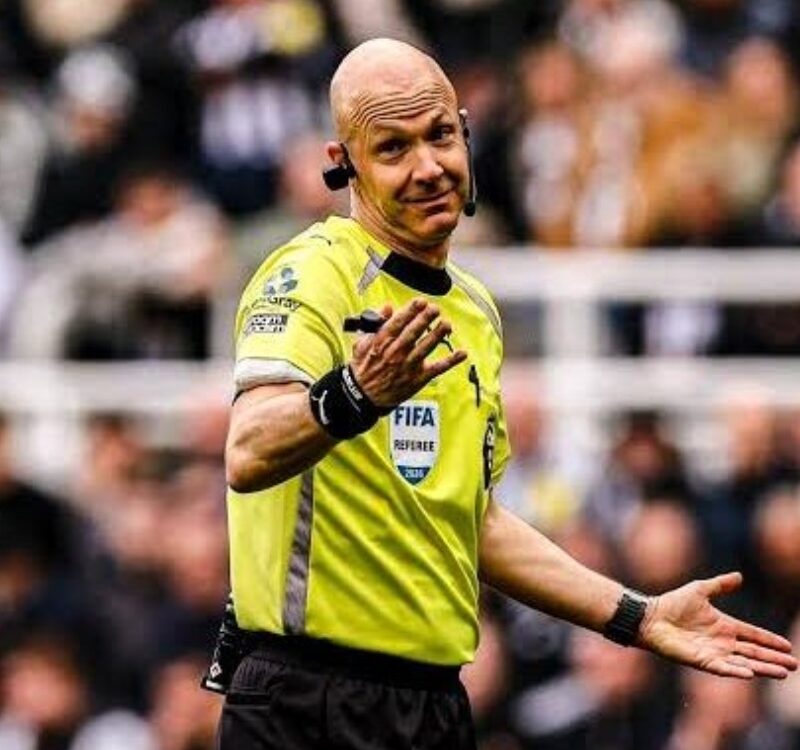
Scrutiny over refereeing standards in the Premier League continues to intensify, with the Professional Footballers’ Association now entering the debate surrounding Anthony Taylor following a string of disputed decisions linked to Tottenham Hotspur.
Spurs’ turbulent season has been defined not only by patchy form on the pitch, but also by a deepening belief among players and fans that crucial officiating calls have repeatedly failed to go their way. Most strikingly, the North London club are yet to be awarded a single league penalty all season — a fact that has not gone unnoticed across the game.
It is understood that the PFA has consulted members of an internal review body — an advisory panel composed of current and former professionals — to examine recent officiating patterns. The group is reported to have raised concerns over inconsistency, especially in decisions with significant implications for player welfare and match results.
A number of specific incidents have been brought into focus. The Premier League’s Key Match Incidents panel acknowledged that Brian Brobbey should have been dismissed during Sunderland’s 1-0 victory over Spurs, after he shoved Cristian Romero into the path of Antonin Kinsky — a foul that went unpunished in real time.
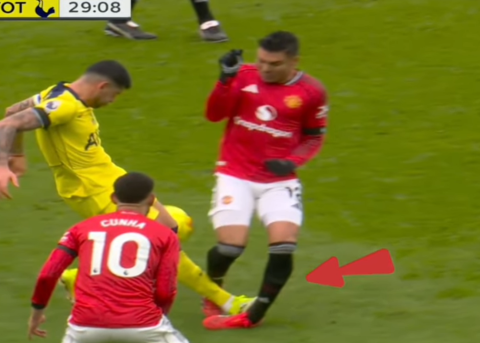
Further controversy arose during Tottenham’s win at Molineux, where Wolves midfielder Andre received only a yellow card following a two-footed lunge on Yves Bissouma. Although former referee Dermot Gallagher backed Taylor’s call — arguing that the player had slipped and that the challenge lacked sufficient force — the incident is said to have been flagged by the PFA as a case where subjective judgement took precedence over concerns for player safety.
The picture has been muddied further by inconsistencies elsewhere in the division. In another fixture, Everton were denied a penalty against West Ham despite an apparent handball by Mateus Fernandes, adding fresh fuel to the ongoing debate about VAR’s application and the reliability of officiating more broadly.
While the PFA stopped short of singling out Taylor for direct criticism, its conclusions are said to advocate for greater transparency, clearer VAR communication, and more defined protocols when officials are assessing dangerous challenges. The decision to involve its advisory panel signals a growing determination among players to play a more meaningful role in conversations about how the game is officiated.
For Tottenham, the harm may already be considerable. With the club embroiled in a tense fight to avoid relegation, supporters are increasingly convinced that fine margins in officiating have had outsized consequences — raising uncomfortable questions about consistency, accountability, and faith in the system as a whole.