They Quietly Rewrote the Rulebook Mid-Match to Bail Tottenham Out of Trouble!
Modern football prides itself on fairness, consistency, and clear rules. Yet in the wake of the explosive clash between Leeds United and Tottenham Hotspur, a large portion of the Leeds fanbase is convinced the rulebook was conveniently reinterpreted the moment Spurs’ survival came under threat.
Anger erupted across social media following a series of contentious officiating calls that appeared to swing in Tottenham’s direction during a nerve-shredding match with enormous relegation stakes. Supporters were left asking one uncomfortable question:
Why do certain rules only seem to surface when they happen to benefit the Premier League’s biggest names?
The flashpoint that ignited everything was the decision to penalize the Leeds goalkeeper for holding the ball too long — a call fans say had been completely ignored throughout the rest of the season. The ruling gifted Spurs a dangerous opportunity at the worst possible moment for Leeds, and the backlash was immediate.
Online, things spiraled fast. One widely-shared post accused officials of inventing new rules on the spot to keep Tottenham afloat, while another pointed out it was apparently the first time all season anyone had seen that particular law actually applied. The conspiracy theories followed swiftly.
The Mysterious Revival of the 8-Second Rule
For years, referees rarely, if ever, called goalkeepers for time-wasting. The old six-second rule existed mostly in theory, with keepers routinely holding the ball for well beyond that with zero consequences.
Heading into the 2025/26 campaign, authorities updated the rule, allowing referees to award a corner if a goalkeeper held possession beyond eight seconds. On paper, it was a sensible change — designed to speed up the game and cut out time-wasting. In practice, however, fans quickly noticed it was almost never actually enforced. Until, apparently, it was Leeds in the firing line.
Officials cracked down sharply during the Leeds-Spurs fixture, penalizing the Leeds keeper at a momentum-shifting moment that handed Spurs a foothold in the match. The accusations of selective enforcement came flooding in immediately.
Leeds supporters wasted no time pointing to a long list of instances this season where other goalkeepers did exactly the same thing and were never punished. The question on everyone’s lips was simple: why now, why this match, and why against a side taking on one of the league’s most powerful clubs?
VAR Pours More Fuel on the Fire
As if the goalkeeper call wasn’t enough, another VAR controversy sent tensions through the roof.
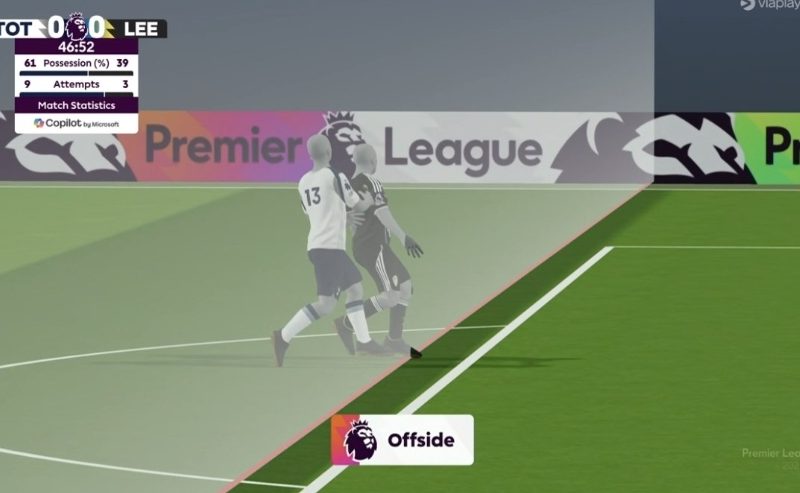
An extremely tight offside ruling against Dominic Calvert-Lewin left supporters incensed, with replay graphics indicating the margin was barely measurable. Many felt the attacker deserved the benefit of the doubt; others questioned whether officials had even frozen on the correct frame of footage.
It reignited years of simmering frustration over VAR inconsistency in the Premier League. Fans have grown weary of watching millimeter offside calls handled differently from one week to the next, with interpretations appearing to shift depending on the clubs involved.
One week the threshold is “clear and obvious,” the next a player’s armpit is enough to rule out a goal. Leeds supporters were especially infuriated because both major flashpoints in the match seemed to land in Tottenham’s favor — a club clawing desperately to avoid an embarrassing drop down the table.
“The Big Clubs Always Get the Decisions”
It may be uncomfortable to say out loud, but the belief that larger clubs receive favorable treatment is widespread among football fans. Not necessarily outright match-fixing, but unconscious bias, media pressure, or a reluctance to make high-profile errors that damage marquee clubs — these concerns have existed for generations.
Tottenham is one of the Premier League’s most recognizable global brands, attracting vast worldwide audiences and generating enormous commercial value for the league. That context only deepens the suspicion. To Leeds fans, it felt as though officials suddenly rediscovered a long-forgotten rule at precisely the moment Spurs needed rescuing.
The online reaction was scathing. Some called it a “Tottenham rescue mission,” others accused officials of shielding the league’s commercial heavyweights at any cost. Even neutral observers admitted the inconsistency looked awful.
VAR Was Supposed to Fix All of This
When VAR arrived, supporters were promised greater accuracy and fairness. Instead, the arguments have never been louder. Every matchweek brings fresh disputes over offside lines, handball interpretations, penalty calls, and uneven enforcement.
The technology was sold as a way to eliminate human error. What it has actually done is introduce a whole new set of confusions. Supporters no longer fully trust what they are watching, and when faith in officiating collapses, conspiracy theories rush in to fill the void — exactly as they did after Leeds vs. Spurs.
Leeds Fans Feel Cheated
For Leeds supporters, this goes far beyond a single result. Many feel their club has consistently found itself on the wrong side of pivotal decisions across recent seasons. So when another chaotic night unfolded against one of the wealthiest clubs in the country, the frustration needed little encouragement to boil over.
The widespread feeling among the fanbase was straightforward: the rules seem to bend depending on who is wearing which shirt.
That perception is becoming genuinely harmful for the sport. Football runs on emotion, passion, and the belief that competition is fundamentally fair. The moment supporters start thinking results are shaped by financial clout, media narratives, or club prestige, the damage to trust is deep and lasting.
What Has to Change?
Fans across the league are now pushing for meaningful reform, including immediate release of VAR audio after matches, greater transparency around offside technology, consistent enforcement of rules regardless of club size, independent reviews of major controversial decisions, and clearer communication from match officials during games.
Too many supporters currently feel that the biggest moments in football are being settled in VAR rooms rather than on the pitch where they belong.
Another Night of Premier League Madness
Whatever one thinks of the result, the controversy is far from finished. Leeds fans remain furious. Spurs supporters will point to their own share of bad calls this season. And neutrals are left once again scratching their heads over why Premier League officiating feels so erratic from one week to the next.
But one message from the angry majority is growing impossible to ignore: supporters have no problem with rules being enforced. They just want them enforced the same way for everybody.