
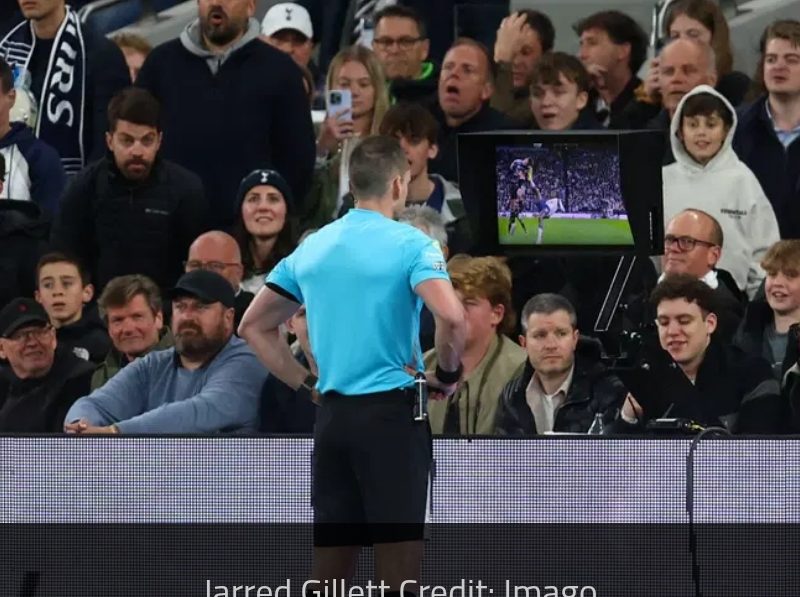
In North London, refereeing decisions and VAR were once again at the heart of the Tottenham vs. Leeds United clash, with the away side seemingly hard done by on at least one penalty call.
Dominic Calvert-Lewin appeared to have a strong case for a spot kick after being brought down by Destiny Udogie, but VAR ruled him narrowly offside — a decision that ignored standards set earlier in the season.
In the 69th minute, referee Jarred Gillett initially waved play on despite Mathys Tel catching Leeds captain Ethan Ampadu with a dangerous high boot. VAR stepped in, sent Gillett to the monitor, and he reversed his decision, rightly awarding Leeds a penalty. The Premier League confirmed the outcome in an official statement, crediting the technology for getting the call right.
The statement posted on X read that after VAR review, the referee overturned his original no-penalty call, with the official announcing that Tottenham’s number 11 had fouled the Leeds attacker and confirming a penalty kick as the final decision.
Leeds arguably deserved a second penalty too. Udogie’s challenge on Calvert-Lewin was clear, and only the slimmest of offside margins let Tottenham off the hook. Crucially, VAR did not apply the same “tolerance rule” used earlier in the season when Florian Wirtz’s goal for Fulham was allowed to stand despite a similarly tight offside — a precedent that had been endorsed by the Premier League’s KMI panel. That consistency was notably absent here.
On top of that, Gillett’s failure to spot the foul on Ampadu meant VAR once again had to do the heavy lifting to deliver a fair result.