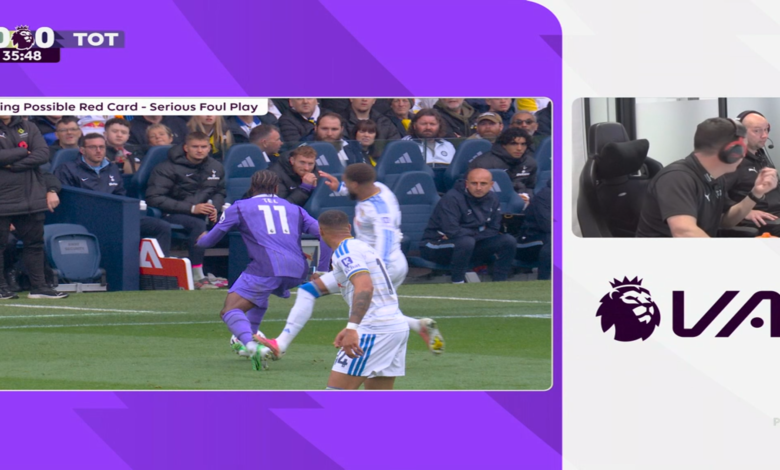
The FA’s latest ruling has sparked a wave of disbelief among fans and pundits, who see the punishment for a controversial incident as hard to justify. A disciplinary matter that should have been simple has become another row over fairness, consistency and the standards applied in the modern game.
Many followers find the outcome baffling. Some doubt the sanction was warranted at all, arguing the incident didn’t merit such a heavy response. The stakes feel higher because the decision could shape how similar cases are judged from now on. The loudest voices simply can’t see how the challenge amounts to a red-card offence and believe the penalty is out of proportion to what actually happened.
It’s a familiar complaint. Supporters expect the governing bodies to weigh the evidence and the circumstances carefully, then land on a verdict that matches the seriousness of the incident. When the verdict is harsher than expected, doubts creep in and people demand a clearer explanation.
The red card itself is one of the heaviest sanctions in the game. It can reshape a match, leave a team a man down and even decide the result, while any suspension that follows disrupts a club’s plans for later fixtures. That is why these calls draw so much scrutiny. Fans want to know whether the punishment reflected the real circumstances or an overly strict reading, and they want assurance the same yardstick will be used for the next player in a comparable situation. The point isn’t about shielding one player or club. It is about proportionality: a challenge shouldn’t earn a dismissal just because it looked ugly or drew attention if it doesn’t meet the criteria for one.
The FA’s rulings matter because they set expectations for players, managers, referees and fans alike. Video technology and disciplinary reviews were introduced to cut down on obvious errors, yet they haven’t ended the arguments. Two people can watch identical footage and reach opposite conclusions, one seeing a dangerous tackle and the other seeing contact that falls short of the threshold. That is why transparency counts. Supporters want to know which rules were applied, what evidence swayed the decision and why the sanction was judged appropriate. Without a convincing explanation, uncertainty hardens into frustration.
Consistency is the other major worry. Fans routinely compare incidents across different matches, and when one player is sent off while another escapes lightly for something similar, claims of uneven officiating follow. That doesn’t automatically make a decision wrong, since each case turns on the nature of the challenge, the level of danger, the point of contact and the laws of the game. Still, the authorities must accept that supporters expect a reasonable degree of uniformity, and that a decision’s credibility depends on whether its reasoning holds up under scrutiny.
The harshest criticism comes from those who call the punishment wholly disproportionate, a reaction that is understandable, since nobody wants players punished unfairly or discipline becoming a fresh source of controversy. Yet player safety remains a real concern, and dangerous play has to be dealt with properly. The key question is whether the evidence supports the sanction handed down. For those convinced the red card was never deserved, the FA’s conclusion has left more questions than answers.
So what’s your verdict? Was the FA right to stand by its decision, or has it gone too far? Should the incident have been a red card, or was a lesser sanction the fairer call?