Tottenham Hotspur didn’t just lose two vital points after Georginio Rutter’s late equaliser for Brighton & Hove Albion — they were also left frustrated by how modern officiating, particularly VAR-related delays, is disrupting the natural flow of matches.
At the Tottenham Hotspur Stadium, Spurs seemed on track for a crucial win in their relegation battle. A superb late goal from Xavi Simons appeared to have sealed the victory, and as the match passed the 90-minute mark, all signs pointed to three points. Instead, the game descended into a prolonged and chaotic stoppage period that ultimately cost them.
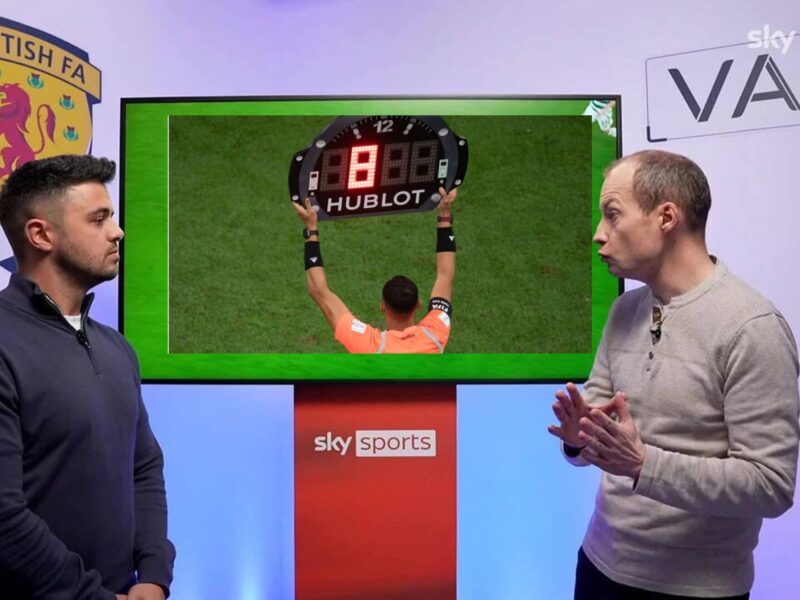
Eight minutes of added time were indicated, and deep into that period, Rutter struck to make it 2-2. What should have been a controlled finish turned into a drawn-out test, highlighting a growing issue in the modern game.
The concern isn’t stoppage time itself, but how it accumulates. While VAR is designed to eliminate clear errors, it often slows matches through checks, pauses in communication, and increased caution from officials. Even without major late interventions, earlier disruptions can significantly extend added time.
On this occasion, Tottenham paid the price.
There was no clear late VAR incident to justify such an extended period, yet the clock continued to run. For players and fans, it raises questions about transparency — when does a match truly end, and how can teams manage games effectively when the timeline keeps shifting?
Rutter’s goal, coming in the fifth minute of added time, underlined that imbalance. By traditional standards, Spurs had done enough to close out the match, but they were forced to defend longer than expected and eventually conceded.
Critics of VAR have long warned about scenarios like this. While it aims to improve fairness, its indirect consequences — such as extended stoppage time — are becoming just as impactful as the errors it seeks to correct. Matches are no longer ending organically; instead, they are being stretched in ways that feel artificial.
For a team fighting relegation, the consequences are severe. This wasn’t just a late goal conceded — it came under circumstances shaped by a system that continues to push games beyond their natural limits.
Even Roberto De Zerbi, facing his former side, might have noted the irony. While his team showed resilience, Tottenham’s inability to see the game out was influenced by factors that seemed beyond their control.
Football has always embraced late drama — but increasingly, the boundary between drama and disruption is becoming harder to define.