“They Moved the Goalposts Mid-Match to Bail Tottenham Out!”
“Tottenham’s Lucky Escape? Leeds Fans See Red Over Decisions That Rocked Elland Road”
Modern football is built on the principles of fairness, consistency, and a clear set of rules. But following the latest fiery encounter between Leeds United and Tottenham Hotspur, a large section of the Leeds fanbase is convinced the rulebook was conveniently reinterpreted the moment Spurs needed a lifeline.
Fury erupted across social media in the wake of a string of contentious officiating moments that appeared to swing in Tottenham’s favour during a tense, high-pressure match with serious relegation implications for both sides.
Supporters were left asking the same uncomfortable question: why do certain rules only seem to get applied when they happen to benefit the Premier League’s established heavyweights?
The angriest flashpoint arrived when officials penalised the Leeds goalkeeper for holding the ball too long — a rule that many supporters argue had been consistently overlooked throughout the rest of the season. The decision handed Spurs a dangerous opportunity at a pivotal moment, sending Leeds fans into meltdown. One widely-shared post accused officials of “inventing rules to rescue Tottenham,” while others described it as the first time all campaign they had seen that particular law meaningfully applied.
That’s when the conspiracy theories really took hold.
The Return of the Eight-Second Rule
For years, referees rarely bothered penalising goalkeepers for time-wasting. The old six-second rule existed largely in theory — keepers routinely held the ball for ten, twelve, even fifteen seconds without so much as a warning. Ahead of the 2025/26 season, the authorities updated the regulation, allowing referees to award a corner if a goalkeeper retained possession beyond eight seconds. On paper, it seemed like a sensible step toward faster, more entertaining football.
In practice, however, supporters quickly noticed it was almost never enforced. Until this match.
With the stakes at their highest, officials suddenly cracked down on the Leeds goalkeeper in a moment that completely shifted the game’s momentum. The backlash was instant, with fans pointing to match after match this season where other keepers had done exactly the same thing without consequence.
The questions came thick and fast: why now? Why in a match of this magnitude? And why against a side battling one of the league’s biggest and most commercially valuable clubs? For furious Leeds supporters, the timing felt anything but coincidental.
VAR Controversy Pours Fuel on the Fire
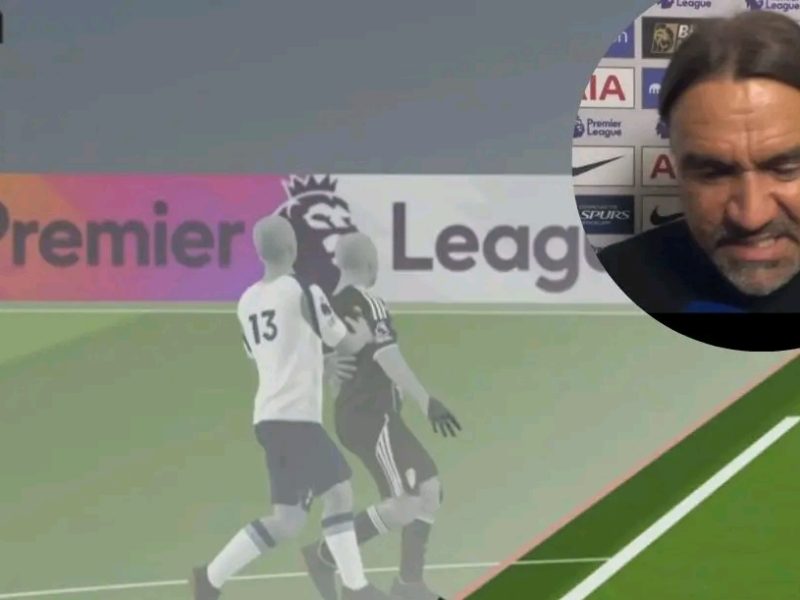
As if the goalkeeper call wasn’t enough, a separate VAR flashpoint stoked the anger further. A wafer-thin offside decision against Dominic Calvert-Lewin left fans incensed, with replays suggesting the margin was so small it was almost impossible to call with any confidence. Many believed the attacker should have been given the benefit of the doubt. Others questioned whether the correct freeze-frame had even been selected.
It reignited all the familiar frustrations around VAR inconsistency in the Premier League. Supporters have spent years watching millimetre-thin offside calls interpreted differently from one week to the next, with the goalposts appearing to shift depending on who is involved. One game it’s about “clear and obvious.” The next, a player’s armpit is enough to disallow a goal. Fans are exhausted by it.
For Leeds supporters, the fact that both of the evening’s major flashpoints appeared to fall in Spurs’ favour — a club desperately clinging on above the relegation places — made it all the more enraging.
“The Big Clubs Always Get the Rub of the Green”
Whether anyone is willing to say it openly or not, the belief that larger clubs receive more favourable treatment is deeply embedded in football culture. Not outright corruption in any dramatic sense — but subconscious bias, the weight of media pressure, or an instinctive reluctance to make high-profile errors involving major clubs? Those suspicions have simmered for decades.
Tottenham remain one of English football’s biggest global brands. Their matches command enormous worldwide audiences, drive significant television revenue, and carry huge commercial weight for the league. That reality only adds fuel to the fire.
To Leeds supporters, it felt as though football’s authorities suddenly rediscovered a long-forgotten rule the precise moment Spurs found themselves in need of help. Online reactions were scathing. Some fans dubbed it a “Tottenham rescue mission.” Others accused officials of shielding the league’s commercial assets at any cost. Even neutral observers conceded the inconsistency looked deeply uncomfortable.
VAR Was Meant to Put These Arguments to Bed
When VAR was introduced, supporters were promised greater clarity and a fairer game. Instead, the controversies feel bigger than ever. Every week brings fresh rows over offside lines, handballs, penalty calls, and selective enforcement of the rules. The technology was sold as a solution to human error. What it has delivered, in many fans’ eyes, is an additional layer of confusion and distrust. When confidence in officiating collapses, conspiracy theories fill the vacuum — and that is precisely what unfolded in the aftermath of Leeds versus Spurs.
Leeds Fans Feel Cheated
For the Leeds faithful, this went well beyond a single match result. Many supporters believe their club has repeatedly found itself on the wrong side of crucial decisions over recent seasons. So when another controversial night unfolded against one of the wealthiest clubs in the division, the dam burst almost immediately.
The sentiment among large parts of the fanbase was blunt: the rules appear to bend depending on who is playing.
That perception is becoming genuinely corrosive for the sport. Football runs on passion, emotion, and an unshakeable belief in fair competition. The moment supporters begin to feel that outcomes are shaped by commercial interests, club status, or media narratives, the damage to the game’s integrity is severe and lasting.
What Has to Change?
Fans across the league are now calling for meaningful reform, including the immediate release of VAR audio following matches, far greater transparency around offside technology, consistent application of the rules regardless of which clubs are involved, independent reviews of disputed decisions, and clearer communication from officials during games.
Too many supporters currently feel as though the biggest moments in football are being settled in VAR rooms rather than on the pitch where they belong.
Another Chaotic Night in the Premier League
Whatever one’s view on whether Tottenham merited the result, one thing is beyond dispute — the controversy is not dying down. Leeds fans remain livid. Spurs supporters will point to decisions that have gone against them elsewhere this season. And neutrals are left once again questioning why Premier League officiating feels so wildly inconsistent from one week to the next.
But amid all the noise, one message from supporters is growing louder and more urgent: nobody objects to the rules being enforced. They just want them enforced the same way for everybody.